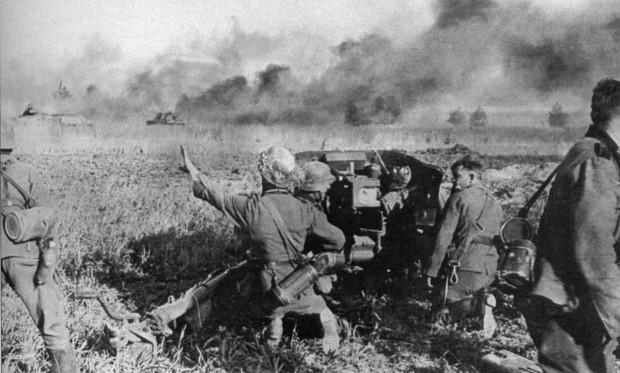
In this Research Survey, Major Timothy A. Wray provides an excellent survey of the intricacies of
employing defensive tactics against a powerful opponent. Using after-action reports, unit war diaries, and other primary materials, Major Wray analyzes the doctrine and tactics that the Germans used on the Eastern Front during World War II.
At the end of World War I, the Germans adopted the elastic defense in depth and continued to use it
as their basic doctrine through the end of World War II. However, because of limitations caused by difficult
terrain, severe weather, manpower and supply shortages, Soviet tactics, and Hitler's order to stand fast,
German commanders were unable to implement the Elastic Defense in its true form.
Everything about Tactical Wargaming at its finest | Campaign Series | WinSPWW2 | WinSPMBT | Scenario Design | AAR | Military History
Saturday, 26 November 2022
Saturday, 19 November 2022
Struggling against Inferiority: German Army Policy, 1890-1914
This thesis by Gavin J. Wiens offers us some insights about the diplomatic and geographic circumstances confronting Germany before the First
World War and the maintenance of a large standing army. In 1890
the Prussian Minister of War, Julius von Verdy du Vernois, introduced a long-term
program of army expansion intended to increase the number of active formations and
provide all able-bodied German males with military training. Whereas considerable
political and social obstacles, together with the inauguration of a naval construction
program in 1898 precluded its completion, the possibility of a two-front war thereafter
ensured that the "realization of compulsory military service" remained the fundamental
objective of the General Staff. Not even the return of budgetary preference to the army
following the second Moroccan crisis in 1911 and the subsequent approval of substantial
army bills in 1912-13 diminished the intense pressure for a large-scale increase in the
peacetime-strength and the implementation of the core principles of the "Verdy Plan."
Friday, 6 May 2022
The Operational Leadership of Helmuth von Moltke
A paper by Gary J. Ohis
Lieutenant Colonel, United States Marine Corps Reserve | "Understanding operational leadership is an important aspect of officer professionalism in the modern American military. By studying the evolution of this concept we can better comprehend its role in the current defense environment, and gain some insights into how it can be applied. Helmuth von Moltke is the prototype model for modern operational leadership. He provides a superb example in both his writings and in his actual application of the military arts.
Subscribe to:
Posts (Atom)

![Helmuth von Moltke, in full Helmuth Karl Bernhard, Count (graf) von Moltke, (born October 26, 1800, Parchim, Mecklenburg [Germany]—died April 24, 1891, Berlin, Germany), chief of the Prussian and German General Staff (1858–88) and the architect of the victories over Denmark (1864), Austria (1866), and France (1871). A portrait of Helmuth von Moltke](https://m.media-amazon.com/images/I/715sLwMZngL._AC_SY741_.jpg)