Monday, 16 September 2019

Operation 'Market Garden': Case Study

American paratroopers land near Groesbeek during Operation Market Garden.
... for Analyzing Senior Leader Responsibilities, by Elizabeth A. Coble, LTC. Abstract: With German forces on the run following the Allied success at Normandy and the breakout and pursuit across France, Allied forces were staged to enter Germany in late summer 1944. Both Field Marshal Montgomery and General Bradley clamored to be given the priority of effort. General Eisenhower chose Montgomery’s Operation MARKET GARDEN as the plan for action. It called for airborne forces to open the route for a ground force to move more than sixty miles up a single road, ending up north of the Rhine River near Arnhem, Netherlands. By accomplishing this task, the German Ruhr industrial heartland would be within easy grasp. But the operation failed. The ground force did not make it to the last bridge; it was six more months before Allied forces crossed the Lower Rhine River near Arnhem.

Sunday, 15 September 2019

Different Opportunities, Different Outcomes – Civil War and Rebel Groups in Angola and Mozambique

Portuguese Mercenaries and FNLA troops after the abortive attack on Luanda.
This study, by Ana Leão, "... explores the development and dynamics of non-state actors in Angola and Mozambique and so contributes to the ongoing debate at the German Development Institute on the issue of non-state (armed) groups and governance impact on development conditions. The study discusses the effect of various dimensions on the historical process of the two countries from the perspective of the rebel movements: the Union for the Total Independence of Angola (UNITA) in Angola’s case and the National Resistance of Mozambique (RENAMO) in Mozambique’s. The analysis focuses on two dimensions: geography and endowments."

Monday, 9 September 2019

Victories are not Enough: Limitations of the German Way of War

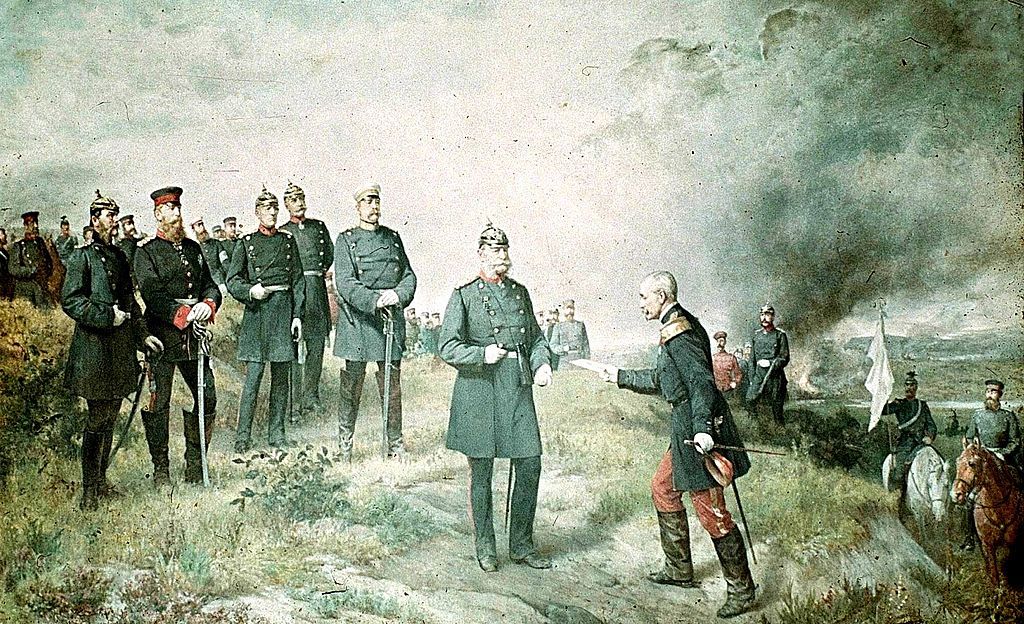
General Reille delivering Napoleon III's letter of surrender to King William I at the Battle of Sedan on 1 September 1870.
Abstract: "Since the early stages of World War II, militaries in general, and the U.S. Army in particular, have studied the German way of war, specifically as practiced in the 20th century. While acknowledging that Germany—and before that nation came into existence, Prussia— produced some excellent armies, major problems with the German way of war must not be ignored. Even the casual observers should have noted that, despite the military prowess of Germany, it lost both of the major wars of the 20th century. This Letort Paper, authored by Dr. Samuel J. Newland, explores the reasons why a nation with such a strong military reputation was unable to win its wars and achieve its goals.  He emphasizes that military power, tactical and operational brilliance, and victories in the field can easily be squandered if a nation has failed to set achievable goals and develop strategies to reach them. This failure, which led to Germany’s defeat in these wars, should not be lost on modern nations as they proceed into the 21st century."